Mata Ni Pachhedi
Other Textiles Based Craft

History
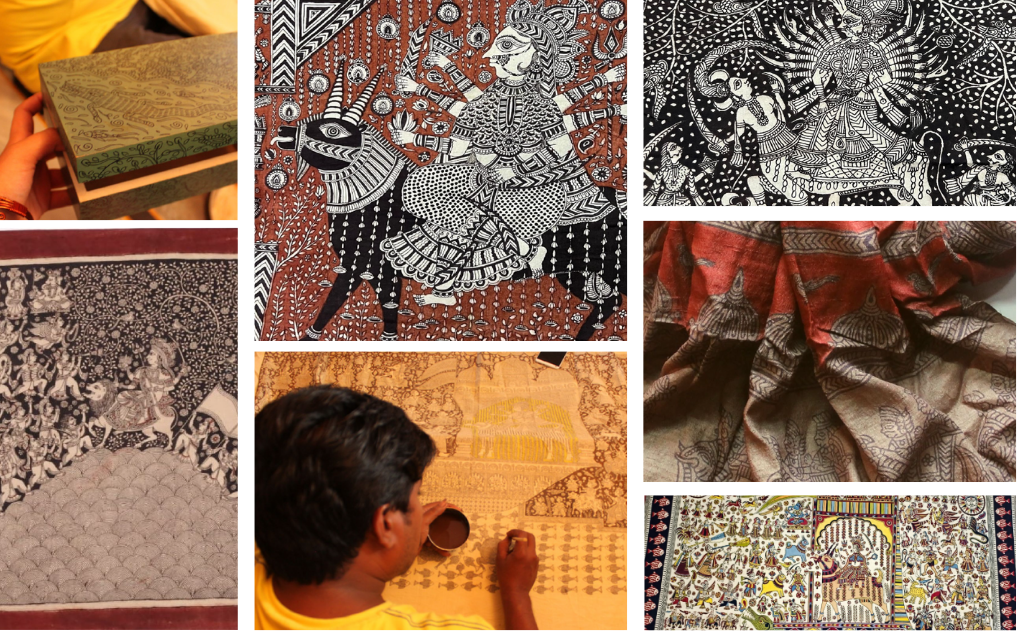
Mata-ni-Pachedi, originating 500 years ago in Gujarat, was created by the nomadic Vaghari community as portable shrines. It evolved into a sacred textile art for group worship during Navratri. Depicting divine stories of goddesses, the craft gained recognition for its intricate block printing and painting. Artisans pass this tradition through generations, ensuring its preservation despite contemporary challenges and fostering appreciation for its cultural heritage.
Raw Materials and Tools
Materials include threads, metal and natural colors like alizarin, and fabric as the base. Clay, bamboo brushes, bamboo sticks, and wooden blocks are examples of tools. For more durable and sharp impressions, wooden blocks were used instead of clay. Expert craftspeople ensure precision and complex patterns by creating detailed blocks.
Process
Artists use bamboo brushes to create drawings themed around deities on cloth. Details are painted after motifs are imprinted using wooden or clay blocks. In addition to maroon and black, the fabric is dyed in more recent hues like green. Every stage demands extraordinary talent, from block printing to hand sketching. After finishing, the fabrics are carefully dyed, dried, and preserved.
Design and Color
Motifs feature mythological themes: goddesses, animals, and worshippers depicted within horizontal narratives. Figures like Bahuchara Mata, Saraswati, and Ramayana characters highlight divine tales. Colors, traditionally maroon and black, symbolize healing and spiritual energy. With demand, artisans expanded palettes to include green and indigo for a vibrant aesthetic.
Product Range
Mata-ni-Pachedi was originally designed as hallowed backgrounds for collective worship, but it has since expanded to encompass wall hangings and ornamental fabrics. Smaller, more adaptable pieces of art are created by artisans using traditional designs. While adding excellent craftsmanship and narrative to homes and other locations, these textiles maintain their cultural relevance.
Additional Information