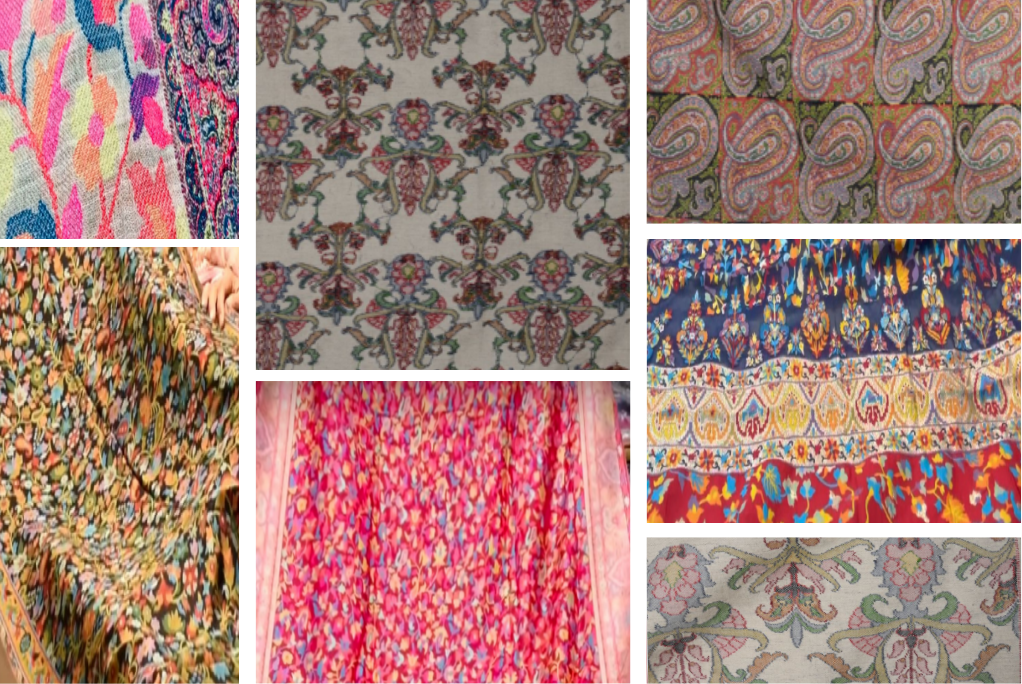
Kani Shawl
Other Textiles Based Craft

History
India has a long-standing tradition of brocade weaving in silk, cotton, and wool. The brocading technique involves inserting extra-weft yarn while weaving, lifting only a small portion of the warp. Each style is unique in its execution. Kanihama, a small village in Kashmir’s Budgam district, is known for its specialized wool-on-wool brocading. Formerly called Gund Kawarhama, it is located along the Srinagar-Gulmarg highway and continues to preserve this intricate craft.
Raw Materials and Tools
Kani weaving requires fine Pashmina wool for both warp and weft. Wooden spools (kanis) replace shuttles, guiding extra-weft yarns. A four-peddled loom, graph paper for design transfer, and talim (weaving instructions) are essential. Traditionally, natural dyes are used to create vibrant, intricate patterns.
Process
Kani weaving uses a four-peddled loom and wooden spools called kanis instead of shuttles. Unlike typical brocade weaving, extra-weft threads are twisted upward with the pattern. Up to 1500 kanis may be used, with two weavers working together, progressing half an inch per day. Patterns are first drawn, transferred to graph paper, and converted into a talim (instructions) recited to weavers, enabling multiple shawls of the same design.
Design and Color
Kani weaving showcases intricate creepers, paisleys, florals, and bird motifs in a rich, vegetable-dyed color palette. Traditionally influenced by Mughal aesthetics, its expanded hues have revived its appeal among fashion enthusiasts. Designers from Shehr-e-Khas, Srinagar, play a key role in its contemporary evolution.
Product Range
Kani weaving produces luxurious shawls, patkas (sashes), turbans, and khilafats (coat fabrics) made from fine Pashmina. Modern adaptations include stoles, scarves, and fabric for garments. The weaving tradition extends beyond Kanihama to Batapora, Mazhama, and Roshanabad, ensuring its continued prominence in the textile industry.
Additional Information