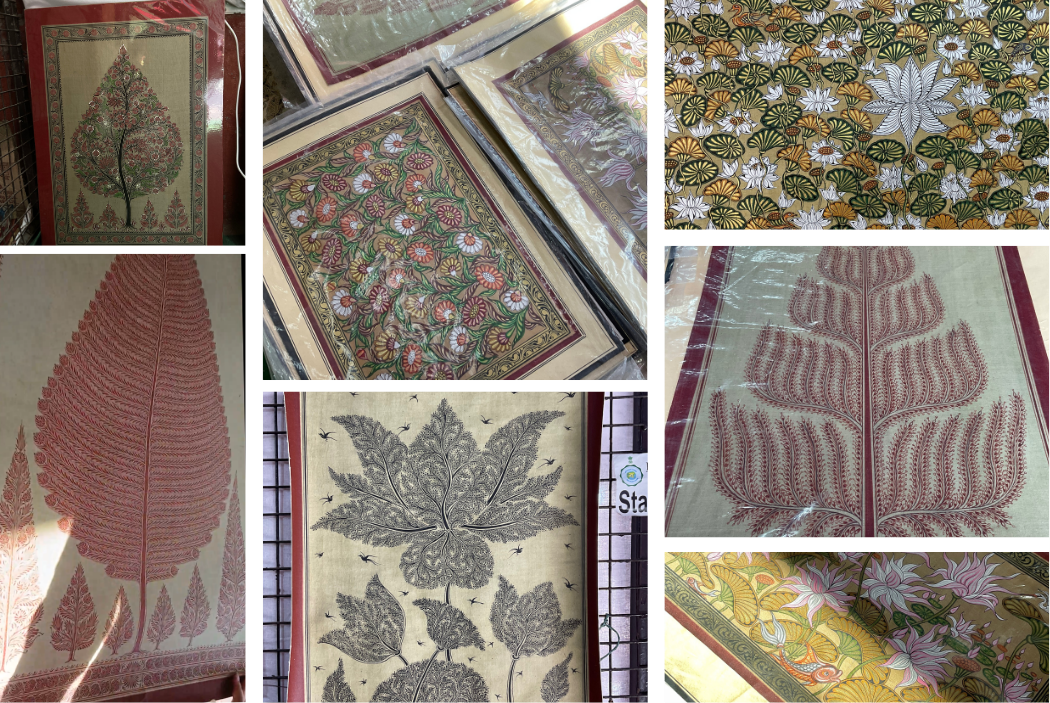
Tassar Painting
Folk Painting

History
These are exotic ancient paintings on hand-made canvases (Patta) or tassar (silk), a natural fabric. It developed as a religious art form from temple rites, particularly from the temple of Jagannath in Puri and other places in Orissa. Great stories were depicted on a piece of cloth that resembled a scroll in tassar paintings that date back to 5 B.C.
Raw Materials and Tools
Tassar silk paintings require wild Tassar silk as the primary canvas, known for its natural sheen and texture. Artists use pencil or charcoal for sketching and natural dyes from plants and minerals for coloring. Thin and fine brushes help in creating intricate details, while gold leaf is used to highlight divine elements.
Process
Tassar silk paintings start with stretching wild Tassar silk on a frame. Artists sketch mythological and religious themes, then apply natural dyes, allowing the fabric’s texture to absorb colors richly. Fine detailing with thin brushes follows, adding intricate borders and layers for depth. Gold accents highlight divine elements like jewelry and halos. Final touches of shading and highlighting enhance the brilliance and vibrancy of the artwork, making each piece visually striking.
Design and Color
From religious and mythological tales to exotic and raga (musical) narratives, these paintings depict a wide range of subjects. Often, the paintings consist of stories of Lord Jagannath as Odisha is the land of Jagannath.
Product Range
The product range of Tassar silk paintings includes sarees and framed paintings, which beautifully showcase intricate artistry and rich cultural heritage.